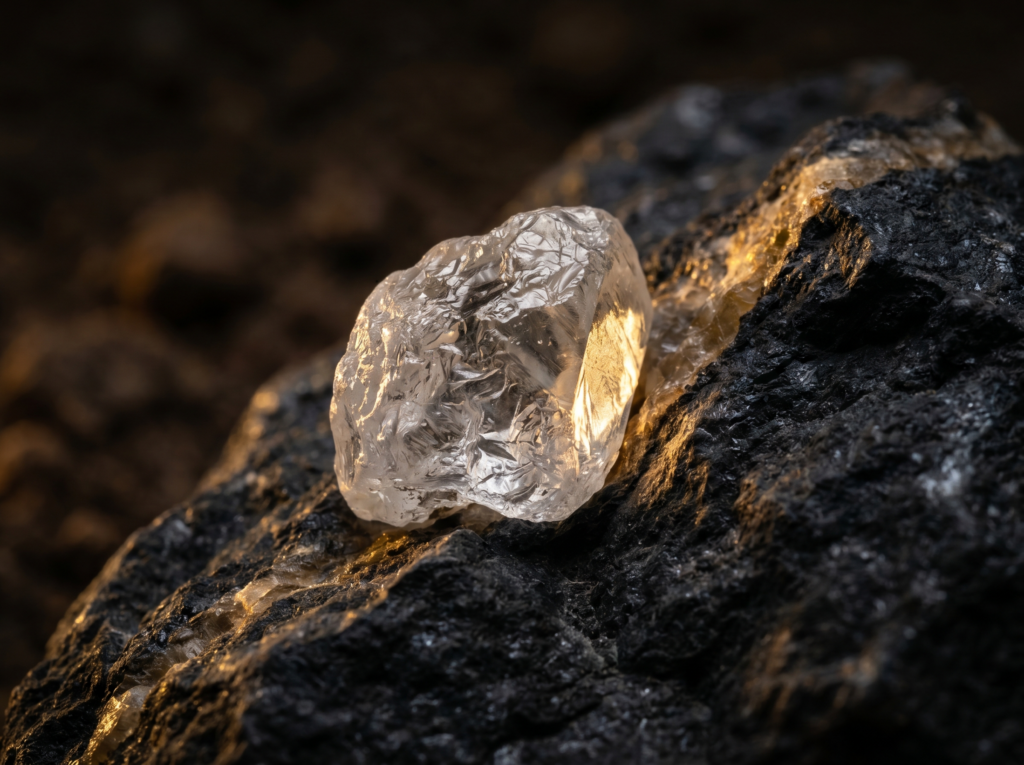
Nearly 100 miles beneath the earth’s surface, immense heat and pressure transform pure carbon into the hardest natural material known. Carried upward through ancient volcanic activity, each diamond carries a history older than civilization itself — a quiet record of time, written in crystal.
A Stone of Stories
A symbol carried through centuries
For millennia, diamonds have been treasured as emblems of strength, clarity, and devotion. From royal courts to modern celebrations, they have marked the moments that matter most — chosen not only for their brilliance, but for what they represent.
From Earth to Elegance
Why Diamonds Endure
A diamond outlasts the moment it marks. Its hardness, its rarity, and the light within it make it a fitting companion to memory itself — a small, permanent piece of something larger.
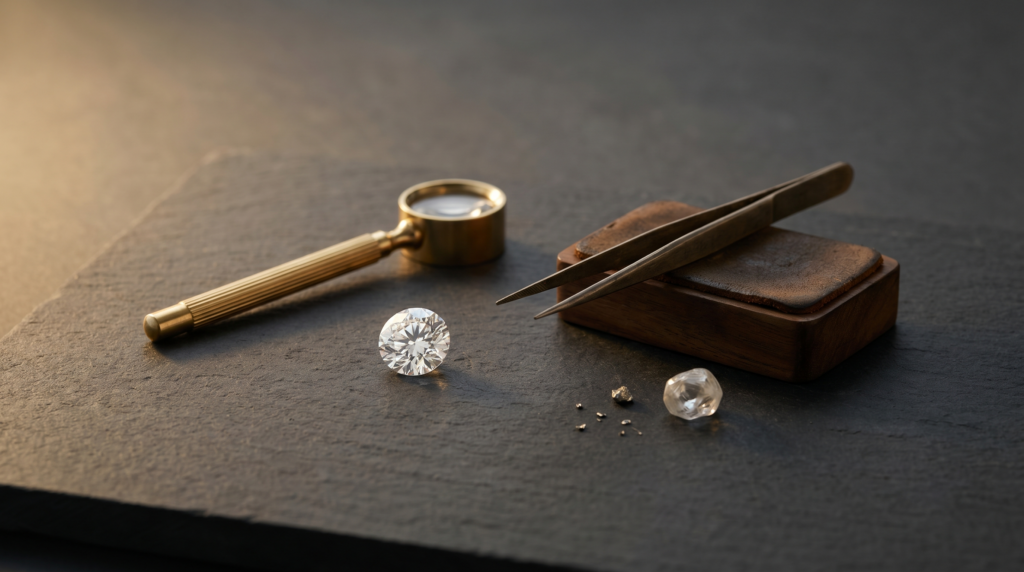
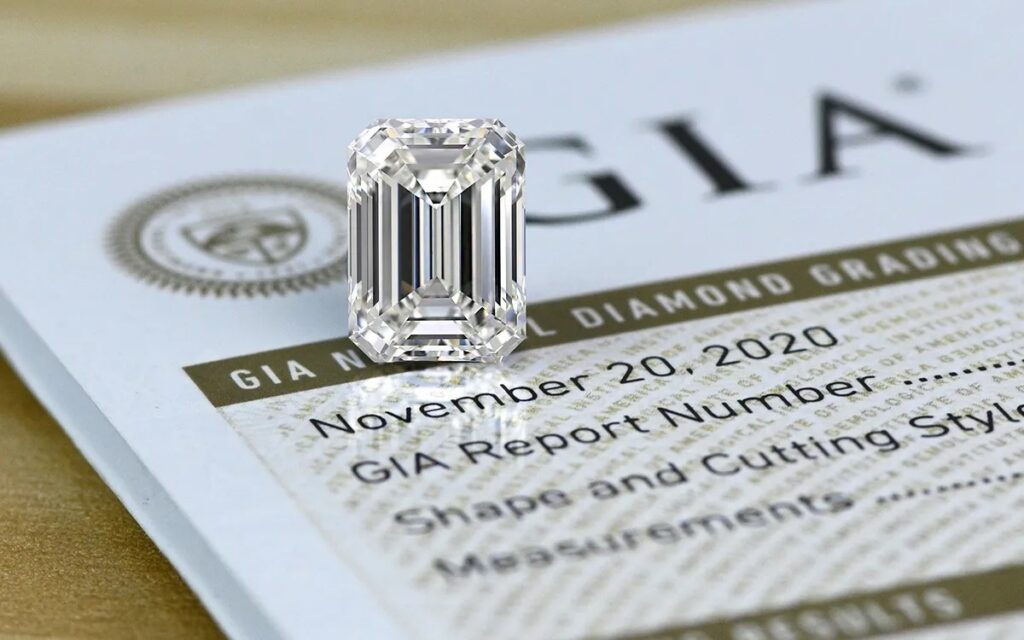
A diamond’s beauty speaks for itself, but its true value is confirmed on paper. Independent grading laboratories examine a stone under controlled conditions and record exactly what they find — carat weight, color, clarity, and cut — in a report that travels with the diamond for life. These certificates exist so that a buyer never has to take a seller’s word alone; they take the word of a neutral, internationally recognized authority instead.
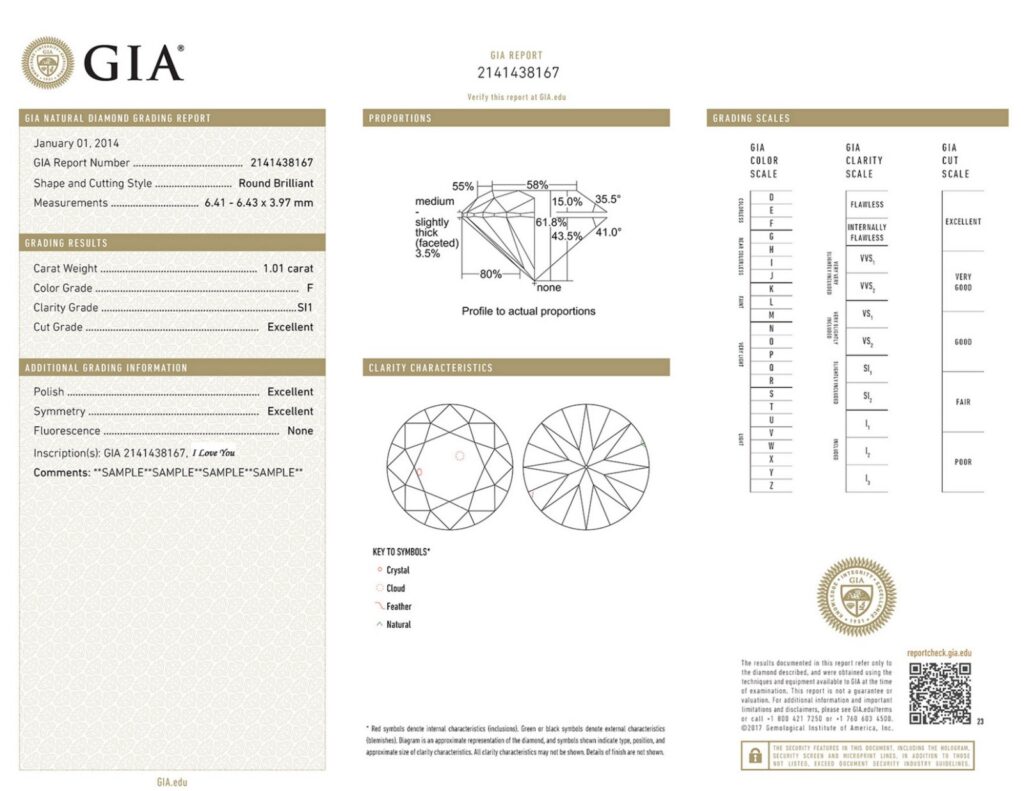
GIA — Gemological Institute of America
Founded in 1931, GIA is the non-profit organization that created the 4Cs of diamond quality and the International Diamond Grading System still used as the global benchmark today. A GIA report lists carat weight, color (D–Z), clarity (FL–I3), and cut grade, alongside a proportions diagram, a clarity plot, and polish, symmetry, and fluorescence findings. Every report carries a unique number that can be verified at GIA.edu, and most stones bear a microscopic laser inscription matching that number to the diamond itself.
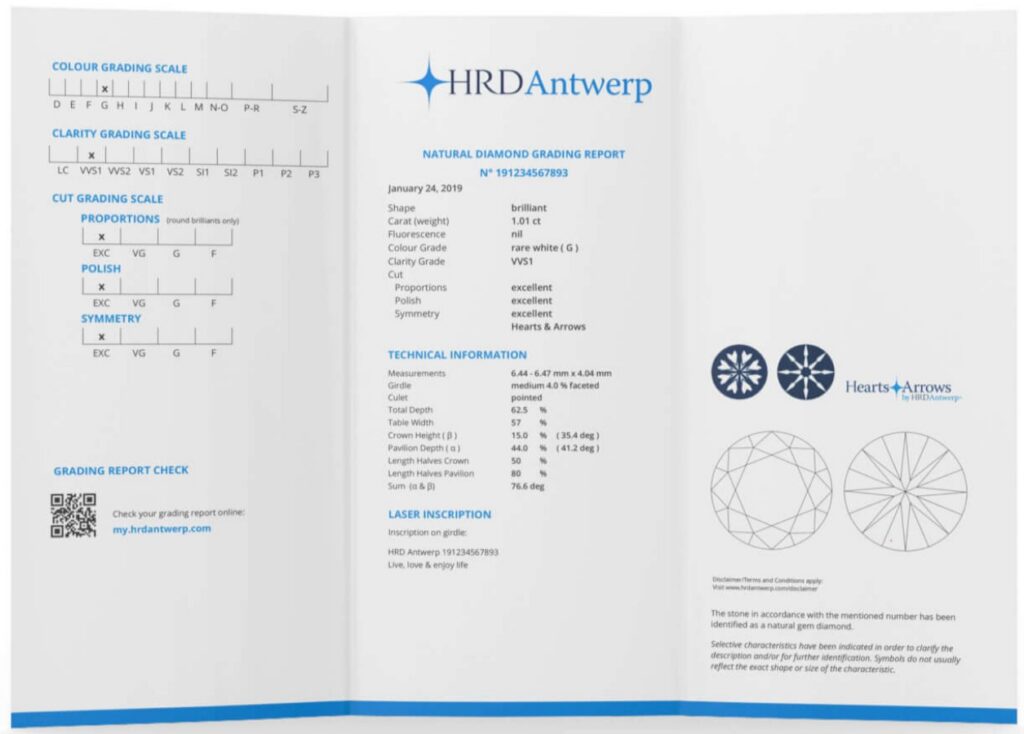
HRD Antwerp
Established in 1973 in Antwerp — one of the world’s oldest and most important diamond trading centers — HRD Antwerp grades diamonds against strict European standards. Its reports detail color, clarity, and cut, and for diamonds of exceptional precision, HRD issues a Hearts & Arrows certificate confirming the symmetry that produces that signature optical pattern. Each report includes a laser inscription on the diamond’s girdle and an online verification number.
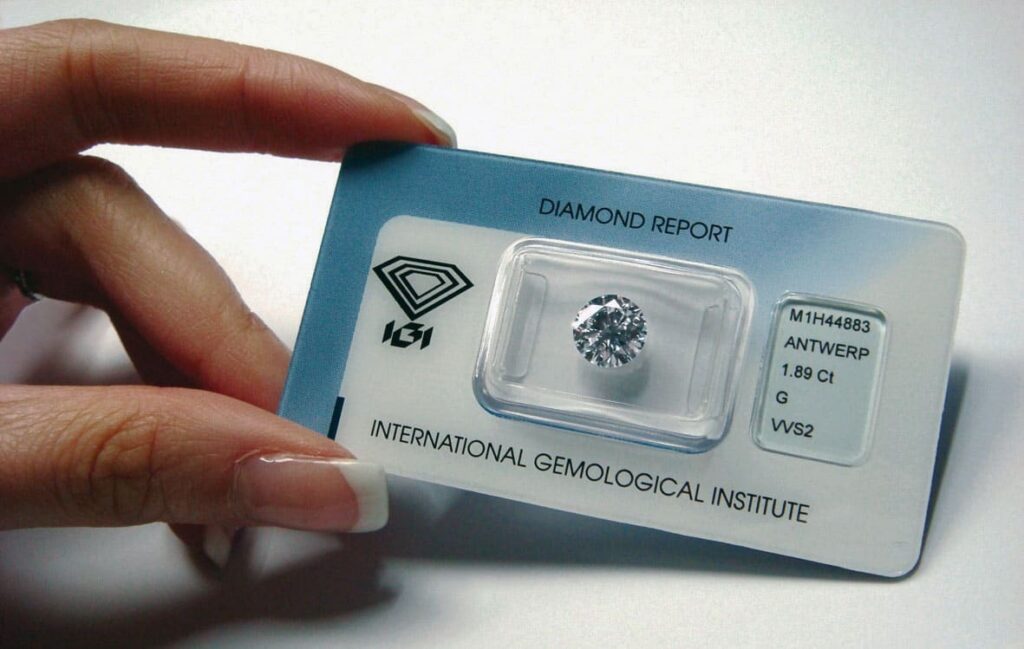
IGI — International Gemological Institute
Founded in 1975, IGI operates one of the largest networks of gemological laboratories in the world, grading both natural and lab-grown diamonds under the same 4Cs framework. IGI reports are sealed in tamper-evident packaging alongside the stone itself, making them a familiar sight at jewelry counters worldwide. IGI’s scale and global reach have made it one of the most widely used grading services for diamonds sold at retail.
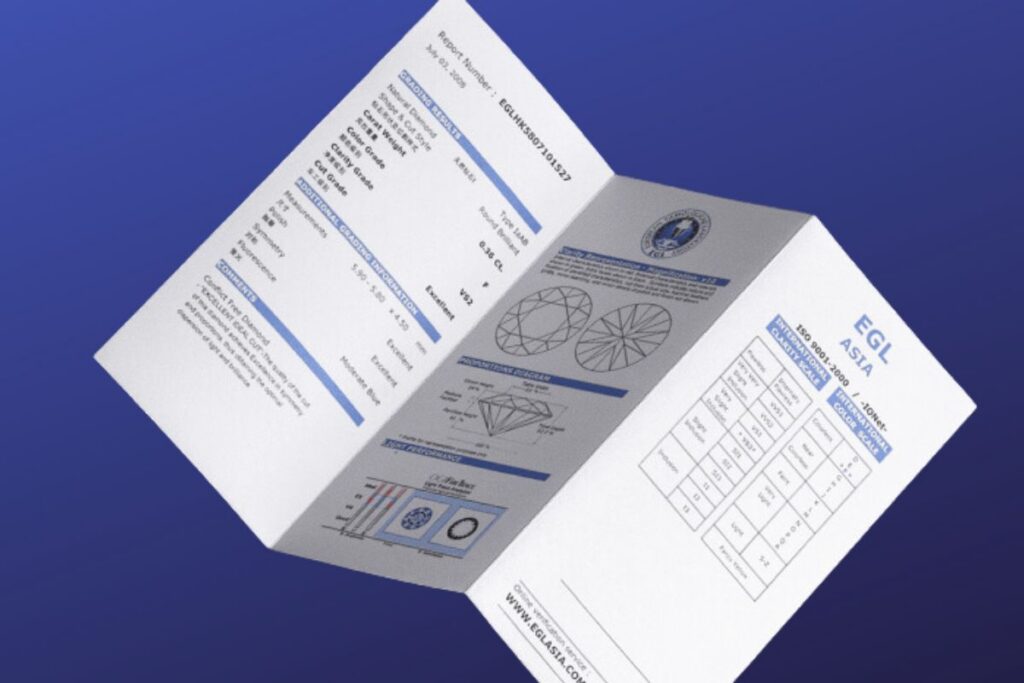
EGL
The European Gemological Laboratory name covers a network of independently operated regional labs, including EGL Asia, each grading diamonds against international color, clarity, and cut scales. Because EGL affiliates operate independently rather than under one central standard, it is worth confirming which specific EGL laboratory issued a given report. As with any certificate, the report number can be checked directly with the issuing lab.
The certificates shown above are provided as a reference guide to help you understand how diamonds are graded and documented — they illustrate report formats, not specific stones. Ask us about the certification accompanying any diamond in our collection.