Stones born of pressure and chance, each one a fragment of color pulled from deep within the earth.
A World Written in Color
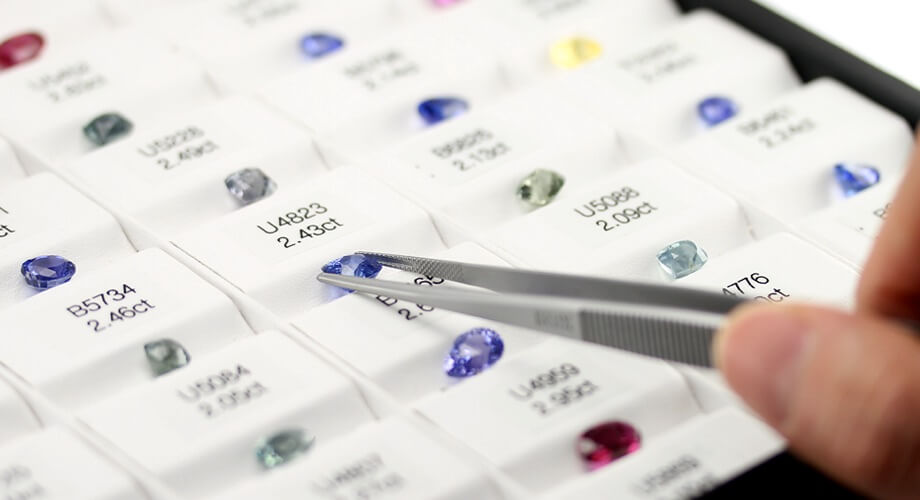
While a diamond is prized for the absence of color, a gemstone is celebrated for revealing it. Sapphires, emeralds, rubies, tanzanite, and opal are colored varieties of minerals shaped over millions of years by heat, pressure, and the trace elements that tint each crystal with its own signature hue. No two rough stones are ever quite the same, which is part of why a colored gemstone can feel less like a product and more like a discovery.
The Language of Shape
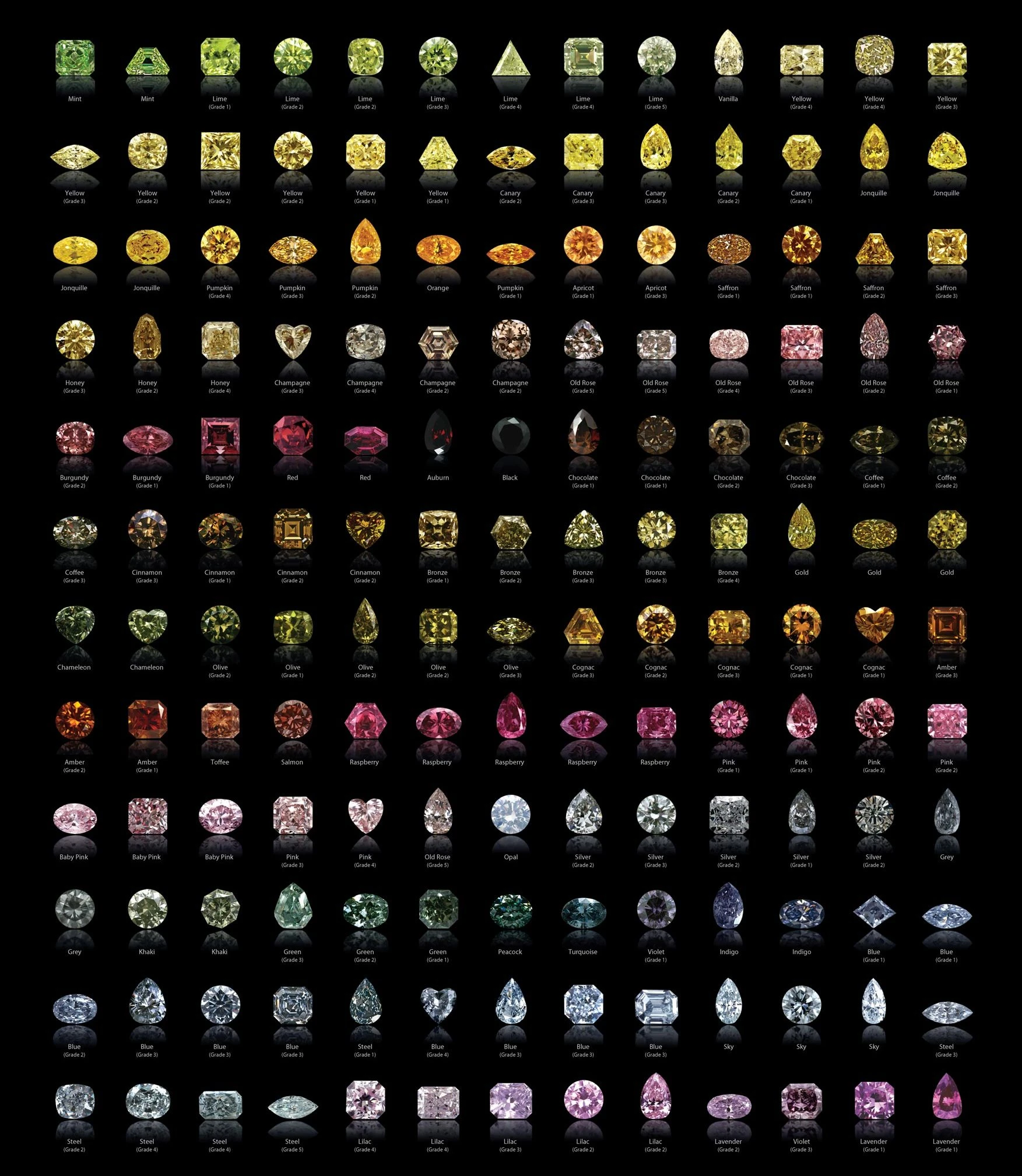
Long before a stone is faceted, a cutter studies its rough form to decide which shape will set its color and light free with the least waste. Round brilliants maximize sparkle through symmetrical facets; ovals and marquise shapes elongate the finger and amplify carat presence; pear shapes taper to a single point for a softened, teardrop elegance; emerald and asscher cuts use broad, step-cut facets to showcase a stone’s clarity and depth of color rather than its fire; cushions and radiants blend the brilliance of a round with the structure of a square; hearts and trillions are reserved for rough stones with enough material to spare for a shape that announces itself. Each shape is a conversation between the cutter and the stone, decided the moment a rough crystal reveals where its color lives most vividly.
The Spectrum of Color
Color is the first thing a gemstone offers, and the hardest thing to standardize. Sapphires move through nearly every hue but red — cornflower blues, padparadscha pinks, and rich yellows are all corundum, colored by trace amounts of iron, titanium, or chromium. Emeralds owe their green to chromium and vanadium trapped inside beryl. Tanzanite shifts between blue, violet, and burgundy depending on the angle it’s viewed from, a rare optical trait called trichroism, and is found in only one place on earth: the foothills of Mount Kilimanjaro. Across the gemstone world, dealers describe color in nuanced vocabularies of saturation and tone, because in a colored stone, color is what clarity is to a diamond — the single quality that says the most about what you’re holding.
From Vision to Setting
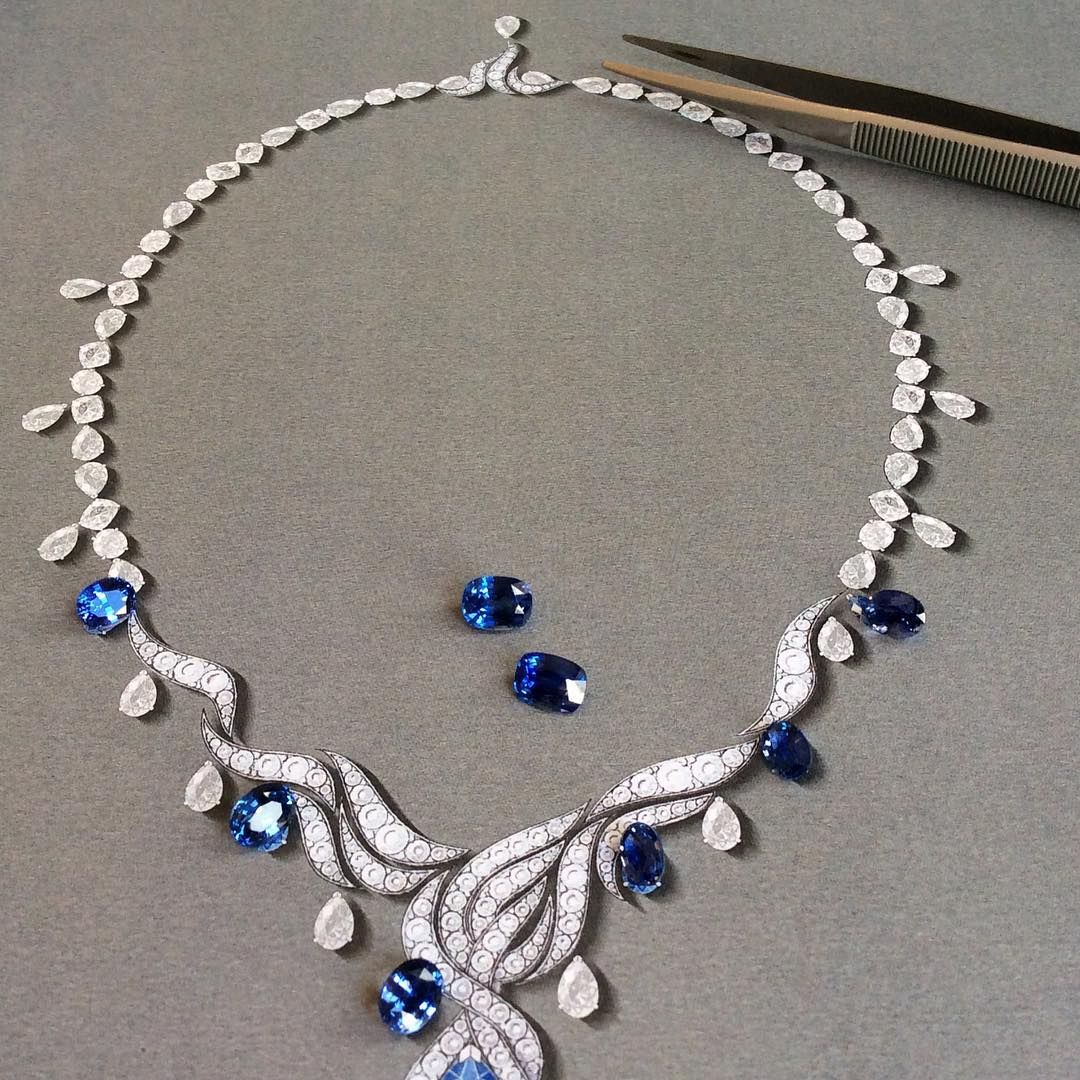
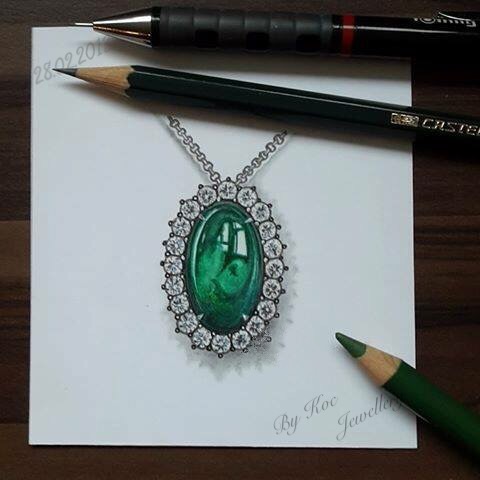
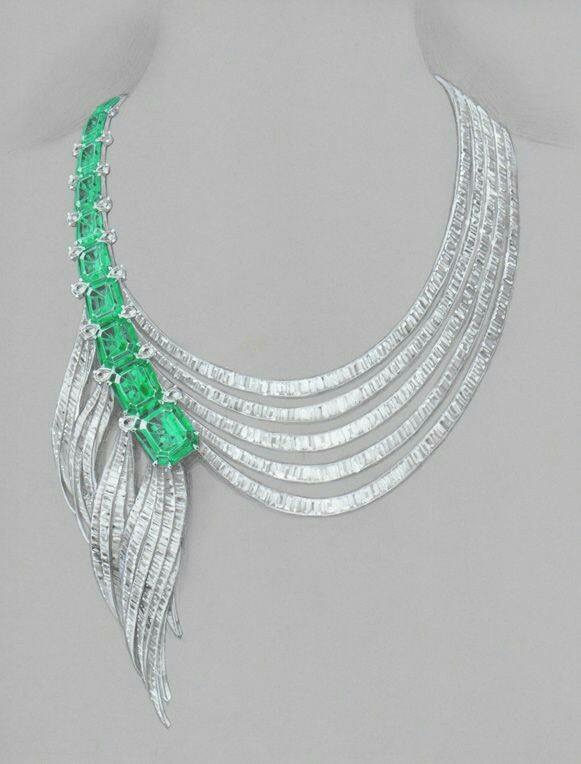
Every finished piece begins as a sketch. A designer studies the gemstone in hand — its shape, its color, the way light moves through it — and begins drawing the metalwork that will hold it without competing with it. Pencil renderings like these map out proportion and balance long before a single stone is set: how a cabochon emerald should sit inside a halo, how cascading leaves of pavé diamonds should fall around a strand of emeralds, how much metal is needed and how little should show. It is in this stage, far from the workbench, that a gemstone’s potential is first fully imagined.
Worn and Treasured
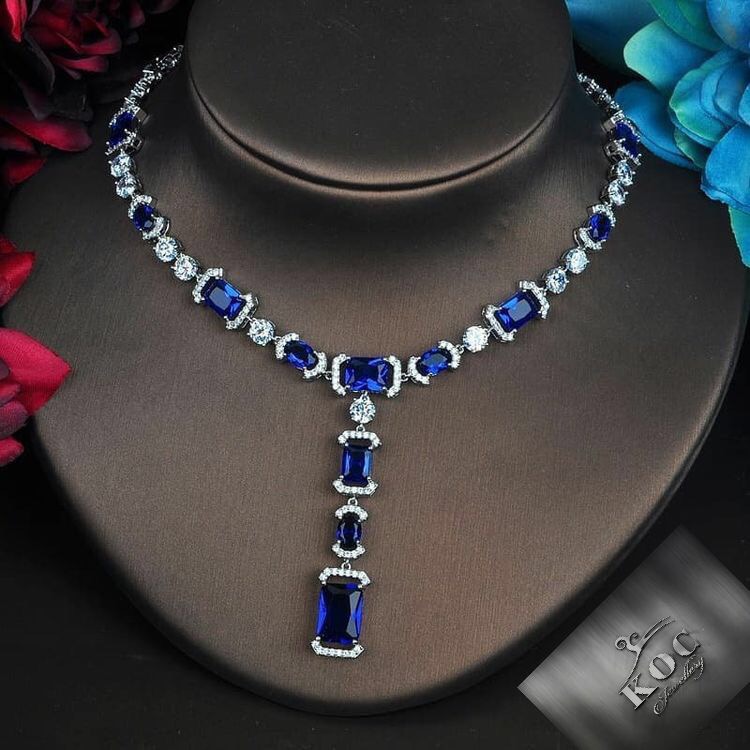
Colored gemstones live differently on the body than diamonds do. A cabochon — polished into a smooth dome rather than faceted — lets a stone’s color pool and glow, ideal for tanzanite, opal, and turquoise. Faceted stones like sapphire and emerald are set in rings, pendants, and earrings to catch and scatter color with every movement. Because many colored gemstones are rarer in larger sizes than diamonds, a single fine sapphire or emerald often becomes the centerpiece of a piece built entirely around it — an engagement ring, an heirloom pendant, an anniversary gift meant to be worn for decades and eventually passed down.
Find Your Stone
Discover the colored gemstones in our collection, each chosen for its color, clarity, and character.